
Aged Shelf Corporations: What They Are and How They Work

Verified Proof
Recent Client Results
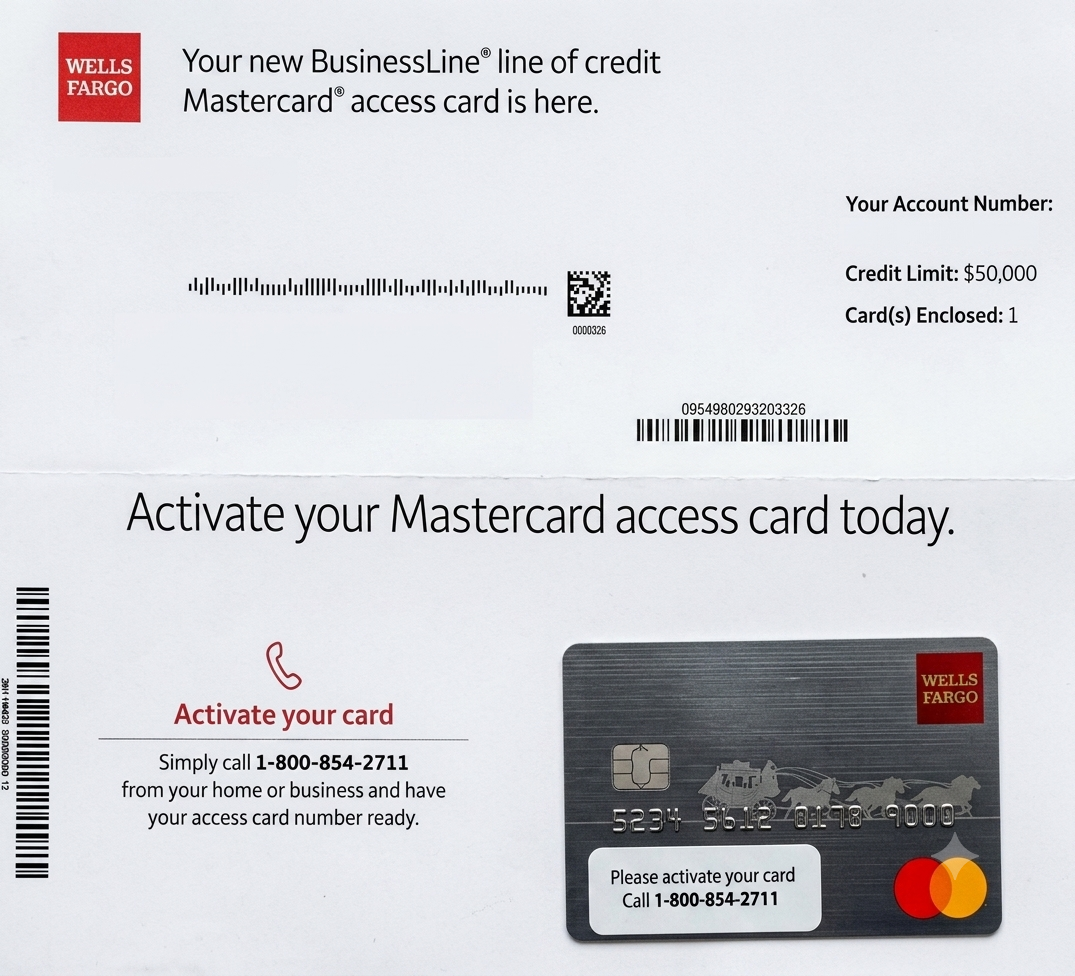
$50,000
Business Line of Credit
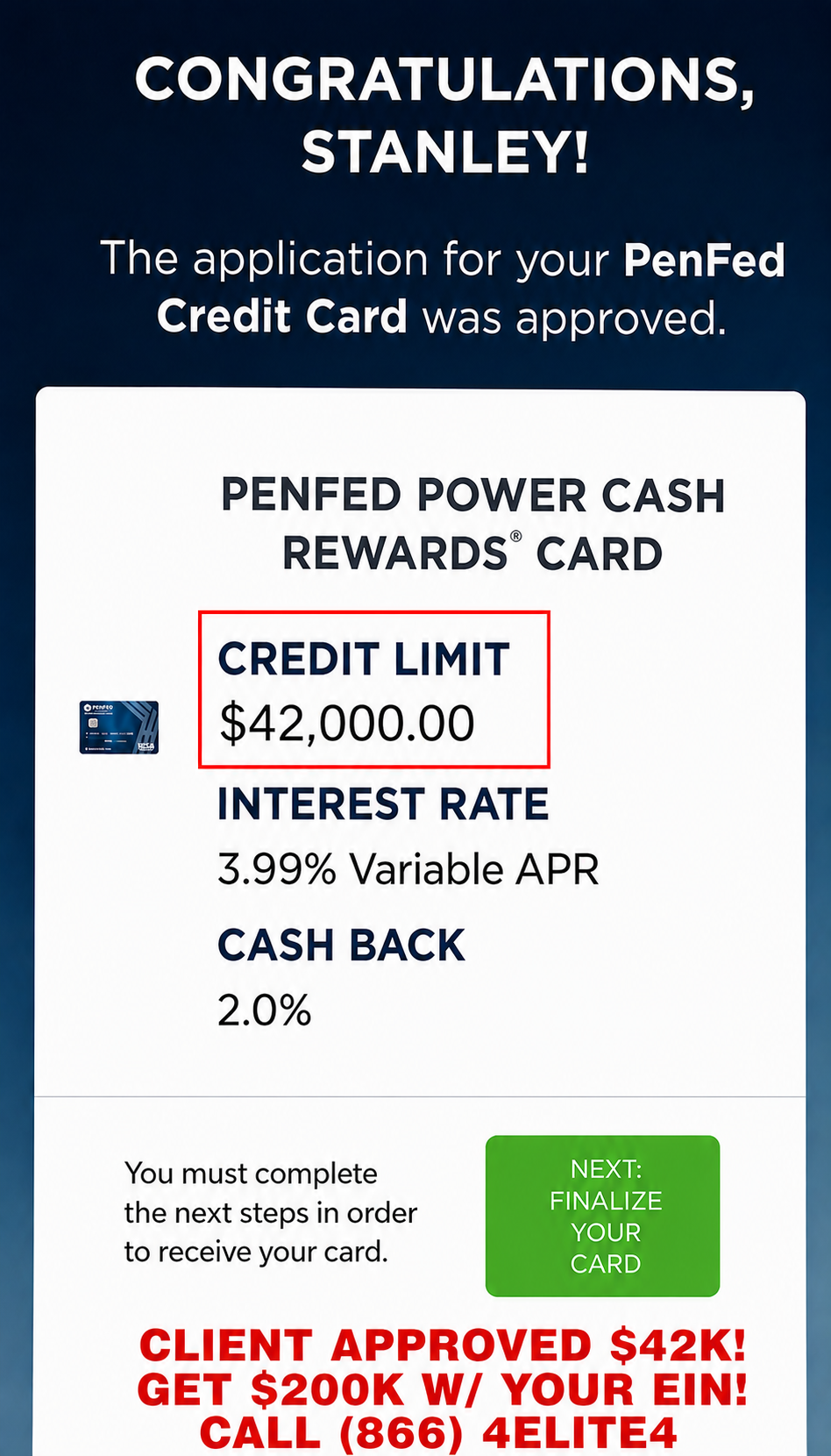
$42,000
PenFed Business Card
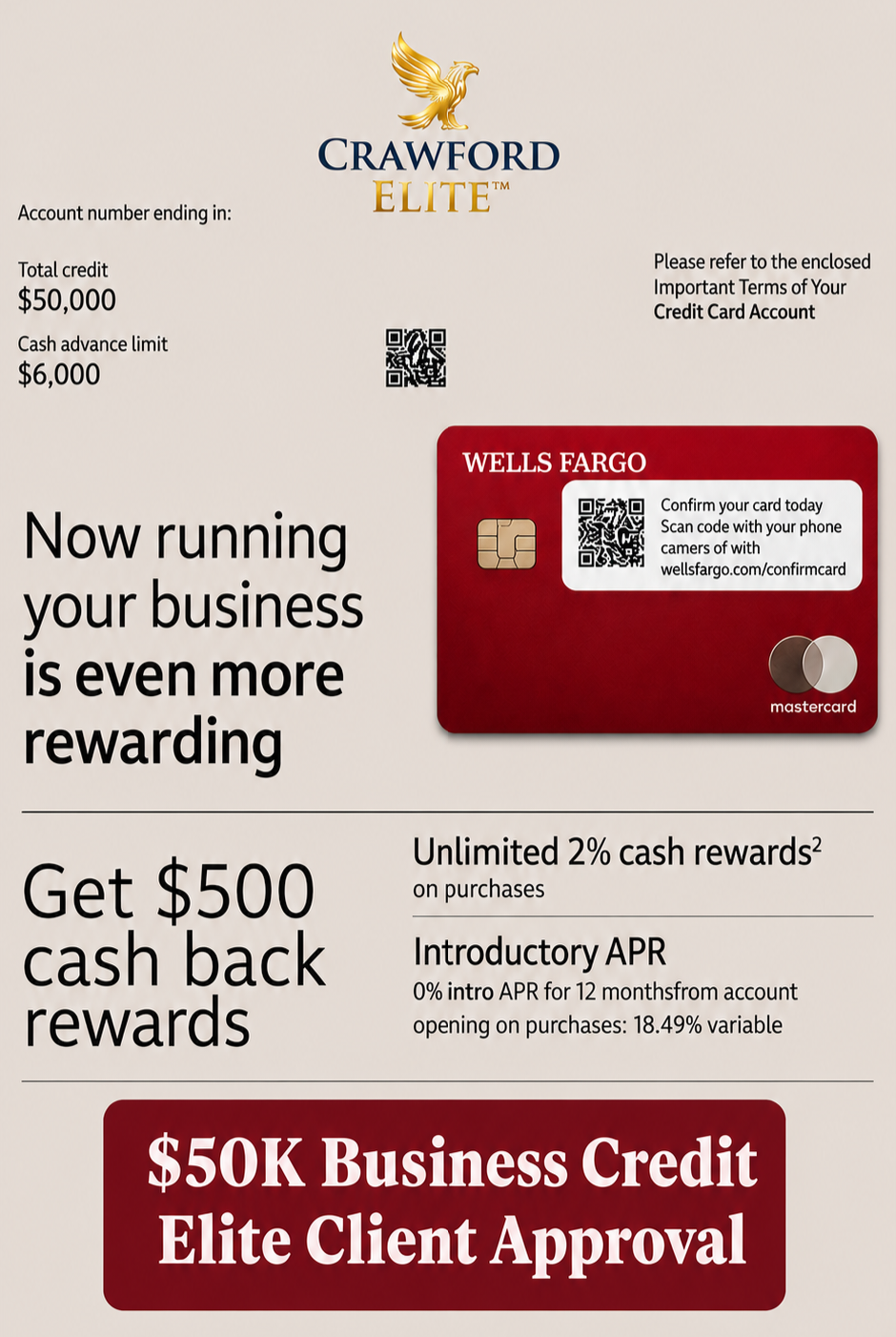
$50,000
Wells Fargo Business Card
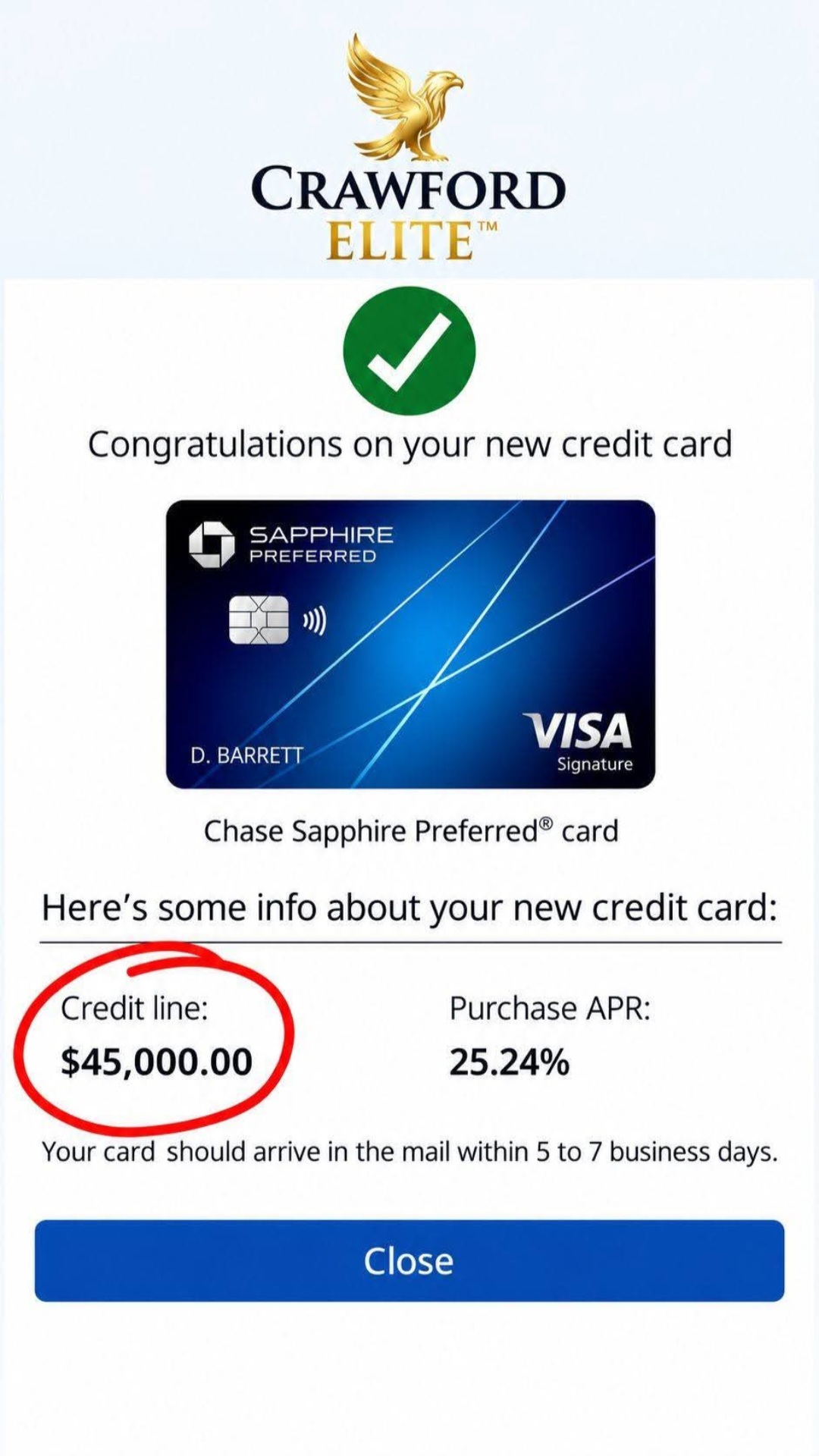
$45,000
Chase Sapphire Preferred

$100,000
American Express Business
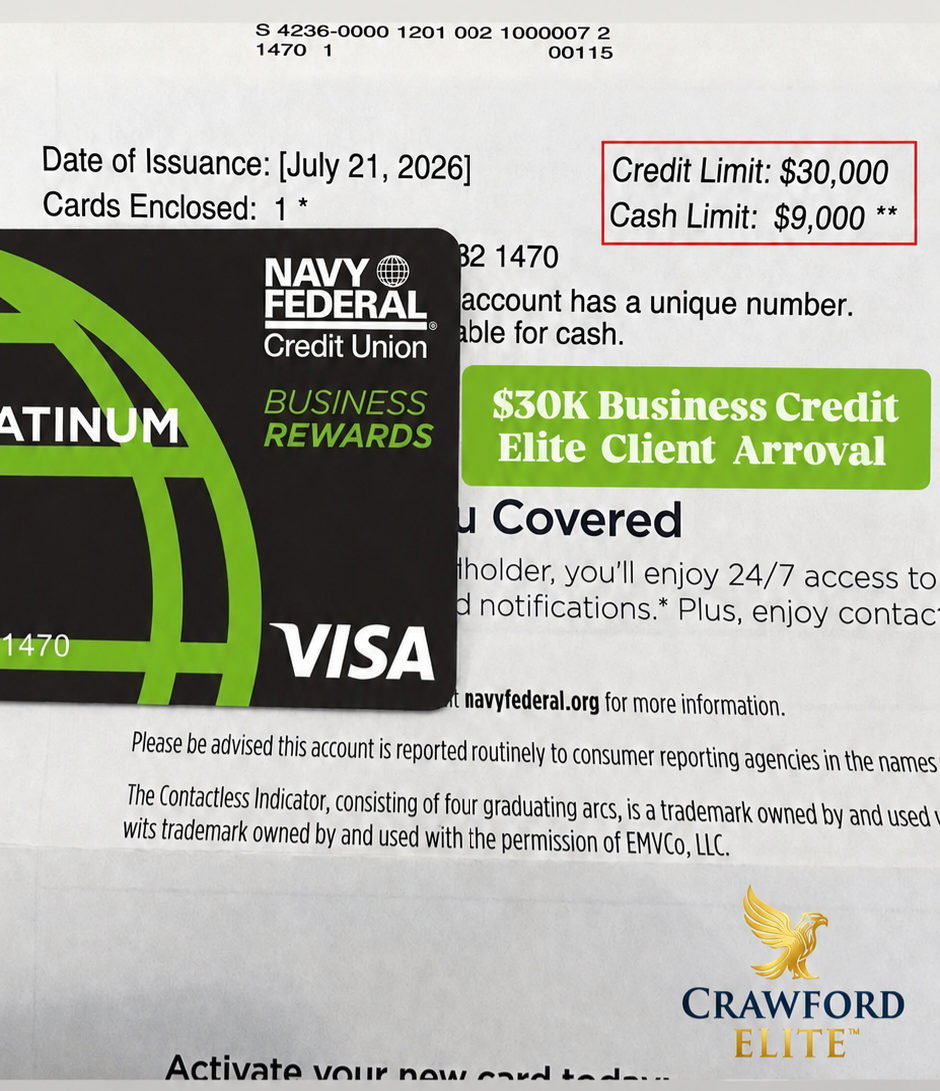
$30,000
Navy Federal Business Platinum
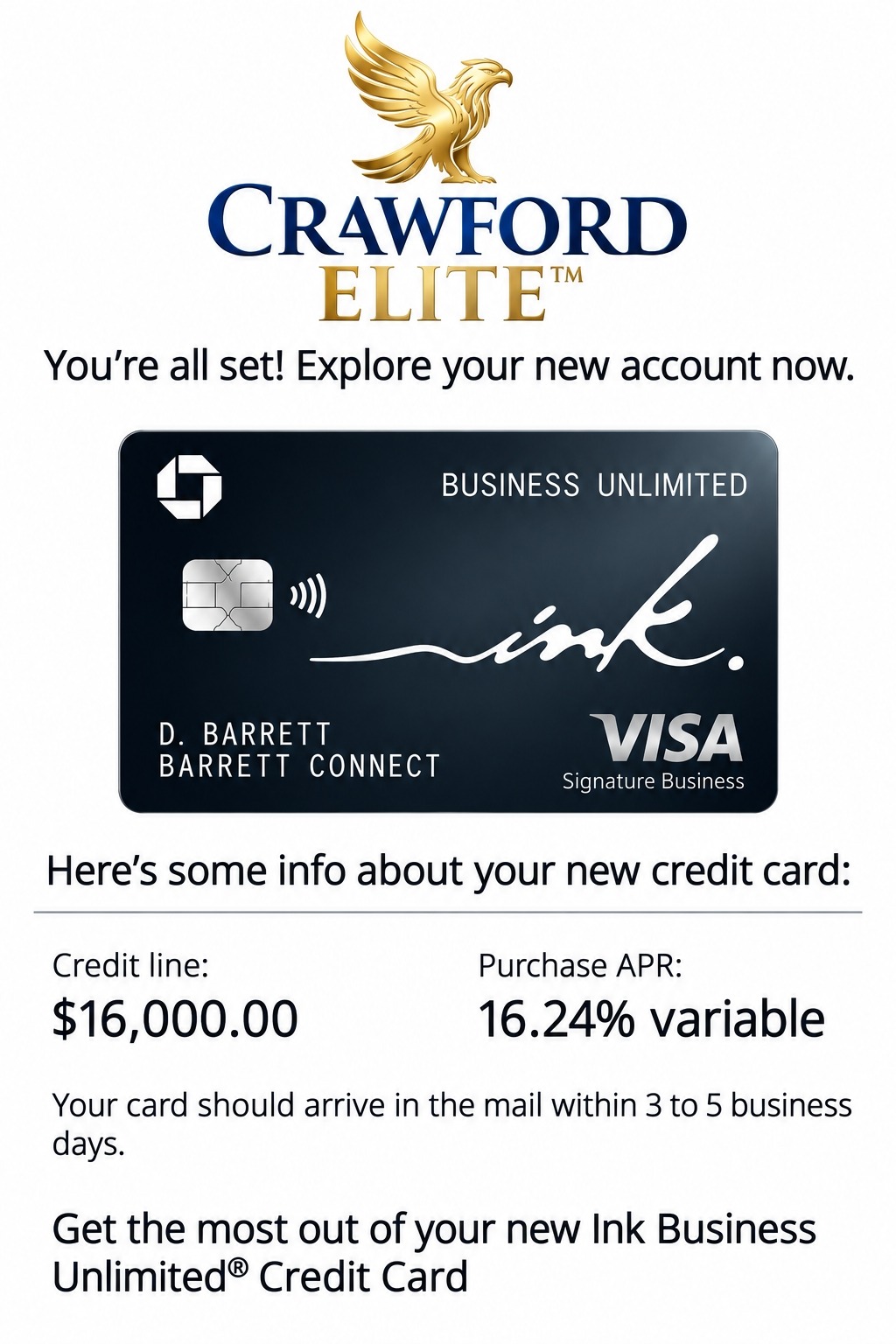
$16,000
Chase Ink Business Unlimited
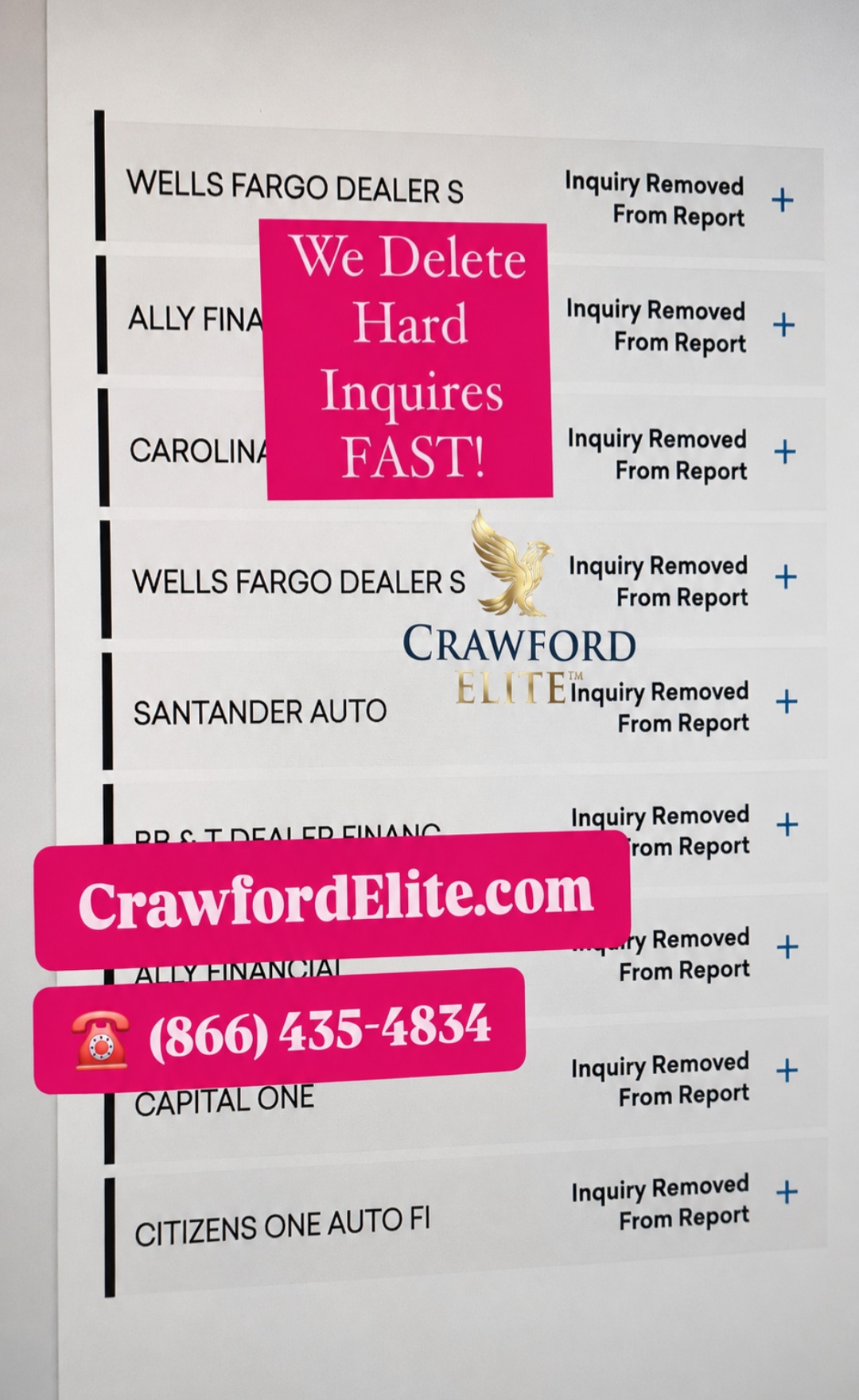
Hard Inquiries Deleted
9 Hard Inquiries Removed
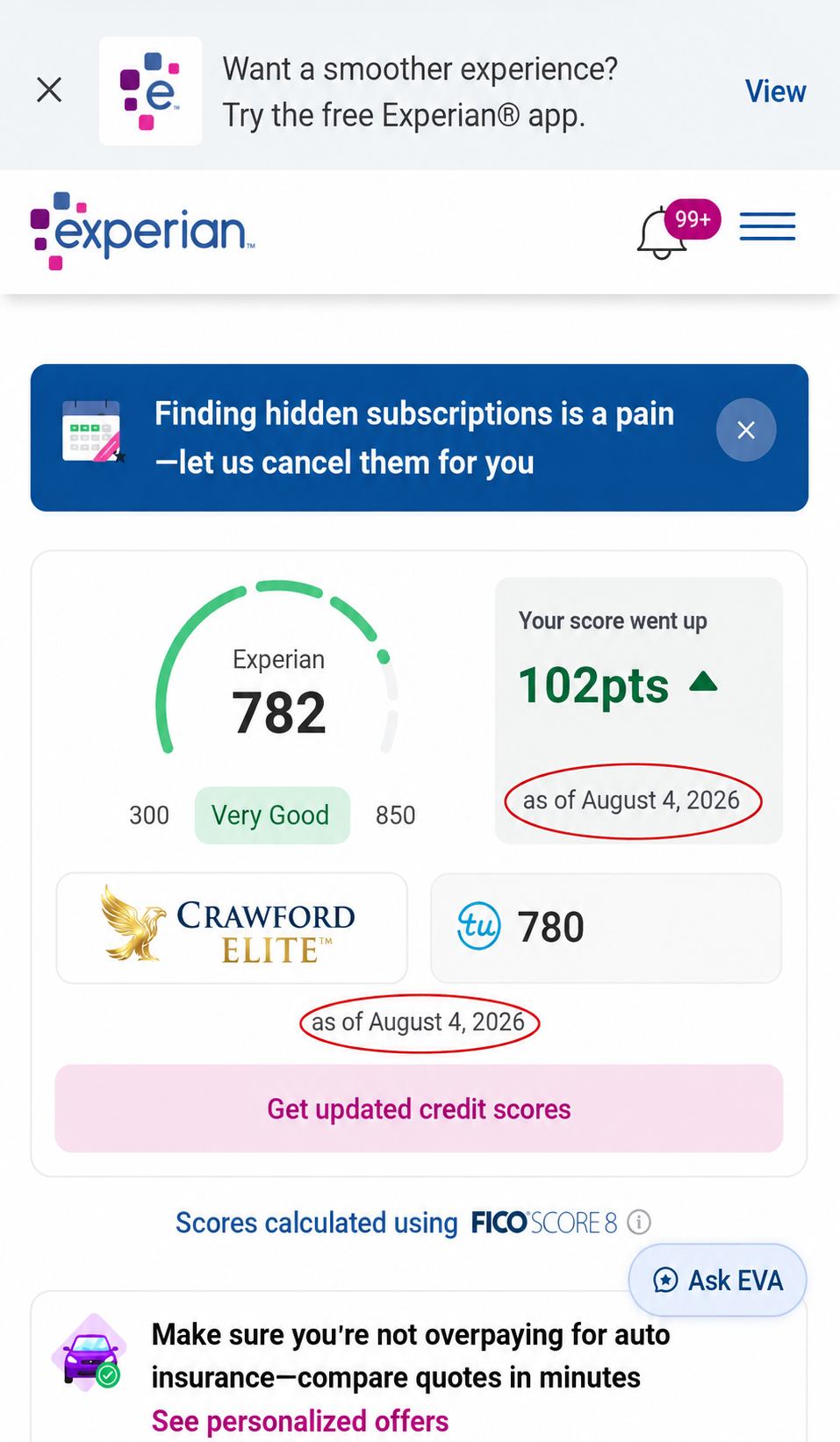
+160 Points
Credit Score Boost Increase
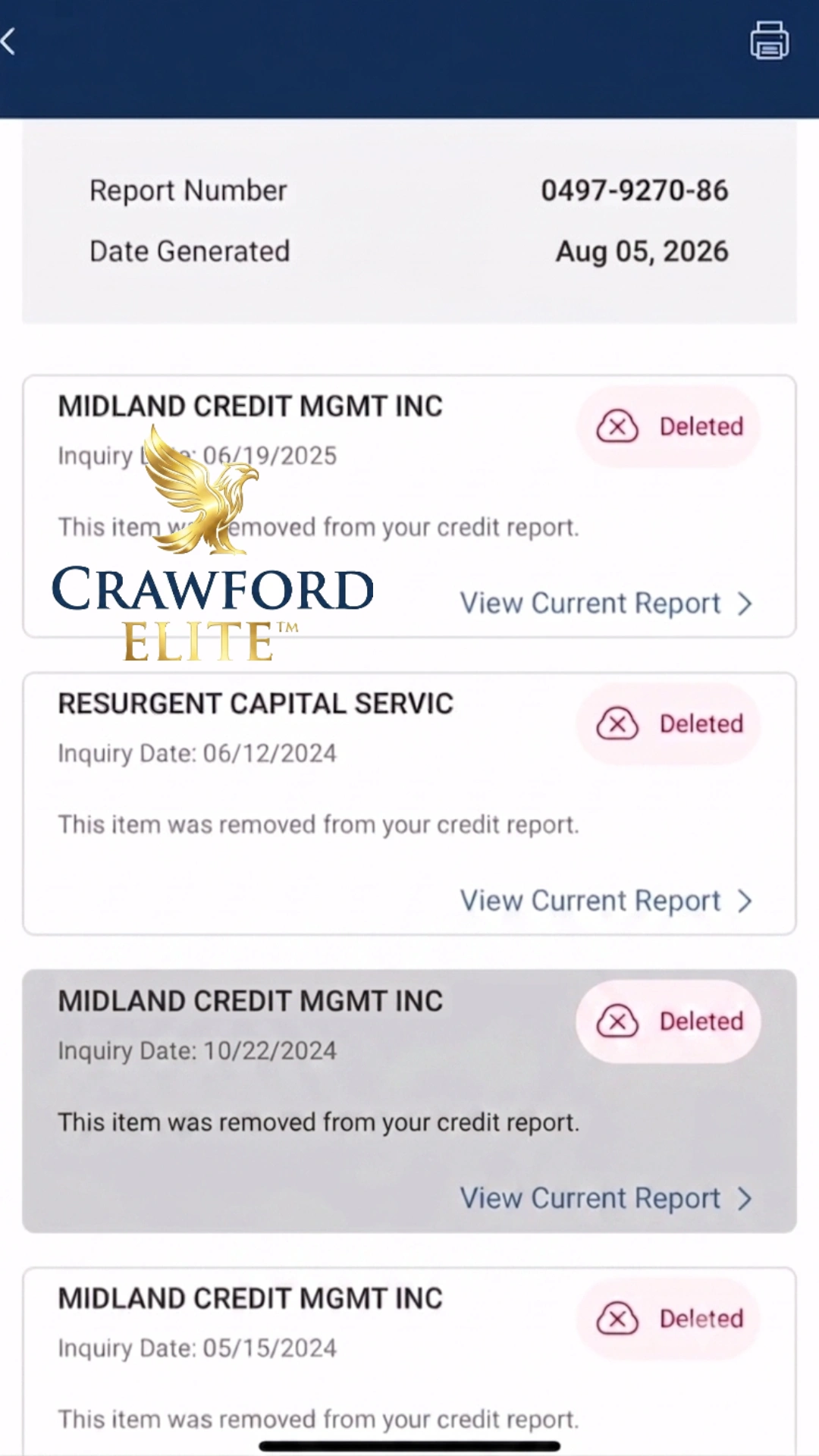
Aggressive Credit Repai
4 Collections Deleted Quickly
Aged Shelf Corporations is one of the fastest levers an owner can pull to unlock corporate capital. Here is exactly how Crawford Elite approaches it with our clients.
Why This Matters
Handling aged shelf corporations correctly is rarely about luck. Lenders and credit issuers run the same checks in the same order, and the businesses that get funded are simply the ones that pass those checks before applying.
At Crawford Elite we build client files in a specific sequence — entity and compliance first, then reporting tradelines, then the approvals. Skipping steps is the single most common reason an owner gets declined with a strong profile.
What Lenders Are Actually Checking
Every underwriter, whether it is a store card issuer or a private lender writing a six-figure line, is answering three questions: is this entity real and verifiable, does it have a payment history someone else already trusted, and can the owner or the revenue support the exposure.
That means a matching EIN, a listed business phone, a real business address, a business bank account with consistent deposits, and reporting tradelines on Dun & Bradstreet, Experian Business, and Equifax Business. When those boxes are checked, approvals stop feeling random.
The Crawford Elite Approach
Our clients run the five-tier path: vendor credit, store credit with issuers like Home Depot, Target, Walmart, Best Buy, Macy's, Saks Fifth, Chevron, Delta and Marriott, then business credit cards, then business cash funding, and finally lines of credit.
The Installment Package builds toward a $200,000 minimum in business credit, fully funded in three to four months, with $3,000 down and $500 biweekly payments toward the $7,000 total. The Platinum Package builds toward a $300,000 minimum in business credit, fully funded in one to two months, with a single $6,500 payment. Neither package includes a shelf corporation — those are purchased separately from our private inventory.
Common Mistakes to Avoid
Applying too early, applying too often, using a residential address on filings, mismatched business names across the Secretary of State, IRS, and bank records, and letting personal derogatories sit unaddressed are the five mistakes that stall the most files.
Fix the profile before the applications go out. Denials leave inquiry footprints that make the next round harder, and rebuilding that momentum costs weeks.
Next Steps
If you want this handled for you, our team audits your entity, your personal profile, and your current reporting, then maps the exact approval order for your business. Most clients start seeing tradelines report within the first 30 days.
Sources & Further Reading
Every claim on this page can be checked against these federal agencies, regulators, credit bureaus, universities, research bodies, banks, and national business publications.
- SBA — 10 Steps to Start Your BusinessFederal checklist from formation through funding.
- Meta for BusinessPaid and organic reach tools for local businesses.
- IRS — Estimated TaxesQuarterly payment rules that protect cash flow planning.
- Experian — Security Freeze CenterManage freezes that can block legitimate underwriting pulls.
- Cornell LII — Equal Credit Opportunity ActFederal prohibition on credit discrimination.
- SEC EDGAR — Company SearchPublic filing history checks for entity due diligence.
- SEC — Small Business Capital Raising HubExempt offerings, investor rules, and disclosure basics.
- FDIC — Deposit Insurance for Business AccountsHow coverage applies to corporate and LLC accounts.
- Bureau of Labor Statistics — Business Employment DynamicsSurvival rates and job creation data for new firms.
- Kauffman Foundation — Entrepreneurship ResourcesLeading research on startup capital access.
- Investopedia — Business CreditNeutral reference definitions for credit terminology.
- U.S. Chamber of CommerceNational business advocacy and research.
- Dun & Bradstreet — Get a D-U-N-S NumberThe identifier behind the PAYDEX score most vendors and issuers check.
- Bank of America — Business Credit CardsTerms and rewards structures for business cards.
- Target — RedCardRetail card terms for a common store-tier account.
- Federal Trade Commission — Business GuidanceAdvertising, credit, and privacy rules that apply to businesses.
- GSA — Doing Business with the GovernmentFederal procurement path for revenue growth.
- LinkedIn for Small BusinessB2B visibility that supports business verification too.
- IRS — Business Expenses (Publication 535)What is deductible, including interest on business credit.
- U.S. Courts — Bankruptcy BasicsHow Chapter 7 and 13 filings report and age off.
- Legal Services CorporationFederally funded civil legal aid network.
- IRS — Business StructuresTax treatment differences between corporations, LLCs, and S-corps.
- FDIC — BankFind SuiteConfirm a lender is a federally insured institution before applying.
- NCUA — Share Insurance EstimatorCoverage checks for credit union business deposits.
Verify Your Entity in Your Own State
We serve business owners nationwide. Look up filings, name availability, and good-standing status with your state's official business filing office.
- Alabama
- Alaska
- Arizona
- Arkansas
- California
- Colorado
- Connecticut
- Delaware
- District of Columbia
- Florida
- Georgia
- Hawaii
- Idaho
- Illinois
- Indiana
- Iowa
- Kansas
- Kentucky
- Louisiana
- Maine
- Maryland
- Massachusetts
- Michigan
- Minnesota
- Mississippi
- Missouri
- Montana
- Nebraska
- Nevada
- New Hampshire
- New Jersey
- New Mexico
- New York
- North Carolina
- North Dakota
- Ohio
- Oklahoma
- Oregon
- Pennsylvania
- Rhode Island
- South Carolina
- South Dakota
- Tennessee
- Texas
- Utah
- Vermont
- Virginia
- Washington
- West Virginia
- Wisconsin
- Wyoming
More Trusted Reading
Additional national resources for owners building credit, capital, and compliance in any state.
- USA.gov — Business ResourcesThe federal government's front door for business services.
- Harvard Business School — Working KnowledgeResearch summaries on finance and firm growth.
- Harvard Business Review — FinanceManagement research on capital decisions.
- Brookings Institution — Economic StudiesPolicy analysis on capital access and entrepreneurship.
- IRS — Free Tax Transcript RequestTranscripts lenders request during underwriting.
- SBA — Certify: Federal Contracting Programs8(a), HUBZone, and WOSB certification portals.
- FTC — Advertising and Marketing RulesTruth-in-advertising standards for financial claims.
- Better Business Bureau — Business ProfilesThird-party verification signal underwriters occasionally check.
- FTC — Fair Debt Collection Practices ActYour rights when a collection agency reports or contacts you.
- Cornell LII — Corporations (Wex)Neutral legal reference on corporate formation and governance.
- Treasury — State Small Business Credit InitiativeState-administered capital programs funded by the U.S. Treasury.
- CFPB — Consumer Credit Card Market ReportRegulator research on limits, pricing, and approval trends.
- Delta SkyMiles BusinessTravel-tier business card offerings.
- Consumer Financial Protection BureauRegulator resources, complaint portal, and consumer research.
- Bank of America — Small Business BankingAccount and lending products for growing companies.
- PACER — Federal Court RecordsPublic court records for judgments and liens due diligence.